
10/01/2026
The Best Homes Aren’t Designed for Today. They’re Designed for What’s Next
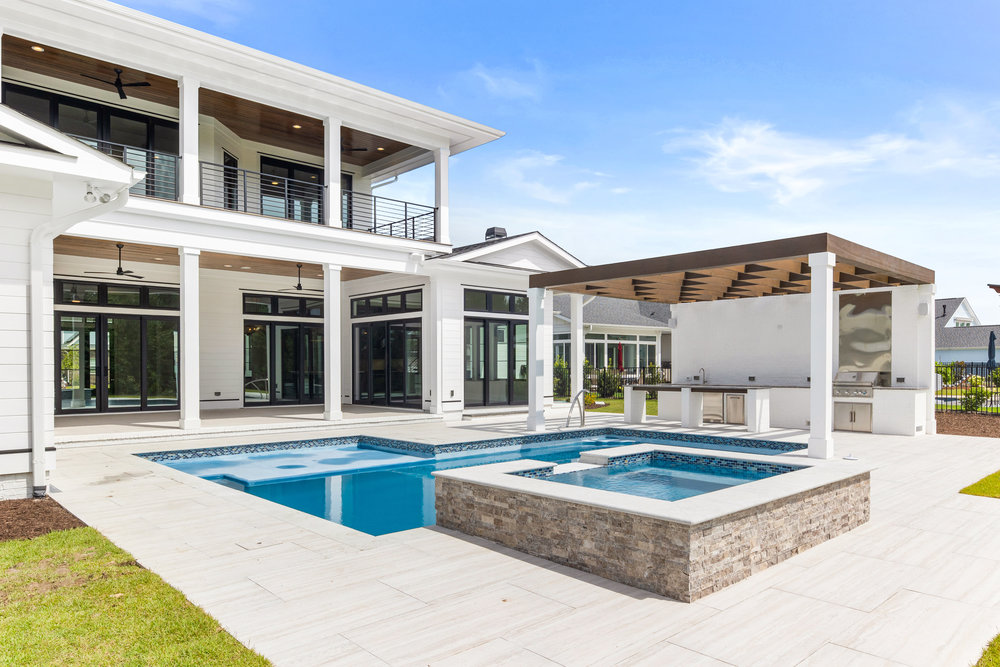
When you’re building a home, it’s natural to think about what you need right now.
How many bedrooms? How much kitchen space? Do you need an office? Where will the television go? Is the primary suite on the right floor?
Those questions matter.
But there’s another question worth asking:
What might your life look like five, 10, or even 20 years from now?
Because if there’s one thing we know after 30 years of building homes, it’s that life rarely stays exactly as we planned it.
Homes Have to Change Because We Do
The couple building a home today may become grandparents a few years from now.
The guest room that gets used twice a year could eventually need to accommodate an aging parent for longer visits.
The home office that became essential during one stage of a career might someday become a studio, hobby room, or space for grandchildren.
The screened porch may turn out to be where you spend more time than almost anywhere else in the house.
And the stairs you don’t think twice about today may be something you’d rather not navigate every morning 15 years from now.
None of us knows exactly what’s coming.
A thoughtfully designed home doesn’t need to predict the future. It simply needs to leave room for it.
Think Beyond Rooms
One of the easiest traps when looking at a floor plan is seeing labels instead of possibilities.
Bedroom.
Dining room.
Office.
Bonus room.
But rooms don’t necessarily have to keep the same job forever.
A flexible space can begin as an office and later become a guest room. A bonus room might start as a place for teenagers and eventually become a media room, fitness space or studio.
The question isn’t simply, “Do we need this room?”
It’s:
What else could this space become?
That small change in thinking can make a tremendous difference in how well a home serves you over time.
Pay Attention to the Everyday Things
Future-proofing a home doesn’t always require dramatic design decisions.
Often, it’s remarkably practical.
A first-floor primary suite.
Storage where you actually need it.
A pantry large enough for the way you shop and cook.
A laundry room positioned where it makes sense.
Doorways and spaces that are comfortable to navigate.
An outdoor living area that feels connected to the home instead of added onto it.
Enough flexibility to accommodate visitors without dedicating large portions of the house to rooms that sit empty most of the year.
Good design often reveals itself not in the impressive moments, but in hundreds of ordinary ones.
Build for the Life You Want
There is also something bigger at work when people decide to build a new home.
For many Hagood homeowners, particularly those moving to coastal North Carolina, the move itself represents a new chapter.
Maybe retirement is getting closer.
Maybe the children have grown.
Maybe there’s finally more freedom to choose where to live rather than letting a career make the decision.
Maybe you’re ready to spend more time near the water, on the golf course, outside with friends or simply enjoying a different pace of life.
In those moments, building a home isn’t really about replacing one house with another.
It’s about deciding how you want the next part of your life to feel.
Your home should help make that possible.
Thirty Years of Looking Ahead
Hagood Homes celebrates its 30th anniversary this year.
Homes have changed considerably during those three decades. So have families, technology, lifestyles and the way people use the spaces around them.
But one thing hasn’t changed.
The best home isn’t necessarily the one with the most square footage, the longest list of features or the trendiest finishes.
It’s the one that feels right on the day you move in—and continues to feel right as life changes around you.
You’ve worked hard to create a life you love.
Your home should be designed for what comes next.
Hagood Homes. Build what’s next.
Connect With Us

We spend a lot of time thinking about what we want in a home today.But what about the life we’ll be living five, ten or even 20 years from now?Families change. Careers change. Priorities change. The guest room finds a new purpose. The home office becomes something else entirely. And features we barely thought about when we moved in can become the ones we appreciate most.A well-designed home doesn’t have to predict the future. It simply needs to leave room for it.In our latest blog, we’re looking beyond bedrooms, bathrooms and square footage to something bigger: how to build a home that can change right along with you.Because the best homes aren’t designed only for today. They’re designed for what’s next.Read more: tinyurl.com/mr3rk5us
Some homes just have that “this is the one” feeling.For John and Janna, it’s their new Cape Hatteras—and now the keys are officially theirs.We love seeing each version of this home take on the personality of the people who chose it, and John and Janna’s is no exception.Here’s to unpacking the boxes, figuring out where everything goes, meeting the neighbors and settling into all the everyday moments that make a new house feel like home.Congratulations, John and Janna. Enjoy every bit of it! #WelcomeHome #HagoodDifference
What does “custom” actually mean to you when building a home?Maybe it’s more windows because natural light matters to you.A bigger pantry because you actually use it.A kitchen designed around the way you cook and entertain.A first-floor primary suite that makes sense for today—and 15 years from now.Or an outdoor living space where you know you’ll spend half your time.When you’re building a home, “custom” doesn’t have to mean changing everything. Sometimes it’s changing the few things that make a home work better for the way you live.So, we’re curious: If you were building your next home, what’s the one thing you’d want to make your own?Tell us in the comments. #HagoodDifference #HagoodHomes #CustomHomebuilder
DISCOVER THE HAGOOD DIFFERENCE
Free Home Guide
By clicking submit, you are providing express consent to be contacted by Hagood Homes via SMS, call, or email, possibly using automated technology to the number you provided. If at any time you wish to opt-out of communication, please reply “STOP”or text “HELP” for help. Message frequency may vary. Message/data rates may apply. Submission of this form does not authorize the purchase of goods, services, or products. See Privacy Policy.